A Playlist for College Applicants
It seems quaint to think that, just a few decades ago, rock music drew disdain for being sordid, louche, and Satanic. The nation’s kids were being corrupted — introduced to sex, drugs, partying — to the soundtrack of power chords, drumbeats, and the whoosh of hairspray. Tipper Gore and PMRC went into a frenzy.
If only they’d known about 4Chan, the dark web, and OnlyFans.
The fact is, rock music is dangerous — but not for the reasons the uptight scolds of the ’80s said it was. The best music, of all genres, promotes individuality, free thought, self-expression, and, sometimes, rebellion. The danger it poses to the forces of oppression and conformity is immense.
Even for high schoolers who aren’t inclined to burn it all down or rage against the machine, a healthy appreciation for music and lyricism can do wonders for even the most conventional exercises in essay-writing. Before college applicants pick up the proverbial pen to write their application essays, they first might want to turn up the (literal) volume.
That’s the theory behind this playlist, containing a couple of dozen songs that I compiled to give my students a respite from textbooks.
Learning to write well starts with learning to listen well. Spotify: Songs That Are Stories.
Songs — with lyrics —can make rhetorical potency more accessible than any other art form does. It doesn’t require the sustained attention that literature does (though I am, of course, all for literature). It is literally inside our ears. We hear it, feel it, and contemplate it. Rhythms, melodies, and harmonies are Trojan Horses for everyday eloquence that can seep into our souls and, in turn, seep out through our writing.
Songs are instructive for students in large part because many of the lyrics are in first-person: singers share their own (or an alter-ego’s) firsthand thoughts and experiences, choosing moments in their lives that warrant catharsis. This approach contrasts markedly with the dispassionate third-person writing that most students do in school. In songs, students can literally hear the emotion and consider how rhetorical choices match up with the more visceral experience of listening.
This is very much what students are expected to write in application essays.
Not all songs tell stories, of course, and not all are sung in first-person. But, many of them do, and many of them are. (Likewise, not all college essays tell stories; but, many of them do too.)
This playlist travels through subject matter that includes romance, breakups, wandering, exploitation of labor, self-defense, coldblooded murder, and breakfast. Even in the brevity of lyrics (around 150 words per minute, many of which are repeated), songs often strike an ideal balance between narration and reflection. They are, by definition, aware that an audience is listening, and they try to tell stories and raise ideas that audiences will appreciate.
In “The River,” Bruce Springsteen recounts an unexpected pregnancy and early marriage: “We went down to the courthouse, / and the judge put it all to rest/No wedding day smiles, no walk down the aisle / No flowers, no wedding dress.” And, years later, he tells us how he feels: “Now those memories come back to haunt me/They haunt me like a curse/Is a dream a lie if it don’t come true/Or is it something worse…?”
In “Blue Sky Mine,” Peter Garrett snarls about earning making less than minimum wage: “The sweat of my brow keeps on feeding the engine / Hope the crumbs in my pocket can keep me for another night.” And he reminds us of the reason why he must toil: “nothing’s as precious as a hole in the ground.”
Simon and Garfunkel’s boxer arrives in the big city and gets knocked out by a truism: “a man hears what he wants to hear / And disregards the rest.”
A heartsick Janis Joplin discovers one of life’s great paradoxes: “freedom’s just another word / for nothing left to lose.”
In a previous era, I’d have made a mixtape, in which tracks would have to have been played in sequence. I encourage listeners to honor that tradition.
I’ve organized the songs in rough order from sanguine to depressing. The list is weighted toward the latter, and the varieties of depression are vast. That’s no surprise. Sadness, anger, resentment, and defeat all make for more compelling stories than blithe enjoyment of life’s great pageant. This is called dramatic tension: we want to know how things turn out. And, let’s be honest, there may be elements of schadenfreude.
Importantly, living vicariously through other people’s despair is a lot more awesome than living through your own. With any luck, depressing songs unleash empathy and catharsis that helps listeners resolve their own tensions and support their friends.
(Needless to say, these songs reflect my personal biases and experiences, which are grounded firmly in the times and places of my youth. I’d argue, though, that few genres excelled in lyricism and musicality as did the rock, folk, and rap of the second half of the 20th century did. I’m not opposed to, say, EDM. But, the lyrics leave much to be desired.)
Here is my charge to high schoolers:
Find the most mindless two hours in your week — the time you might spend on social media or on SAT prep — and give yourself the gift of music. Lie down on your bedroom floor, put on headphones, and stare at the ceiling. Take a road trip and crank up the car stereo. Have a listening party with friends. Feel the music. Listen to the words. Think about how they relate to your life, or how they introduce you to something new. Replay the ones you like. Replay the ones you don’t like. Pick some of your own. Share some with friends. Have friends share some with you. Ask your parents to point out their favorites.
You’ll be happier for it. And, when it comes time to write about your breakups, moral anguish, journeys into space, or escapes from the law — or just your school activities and potential college major — your writing will be better off for it.
Rock on.
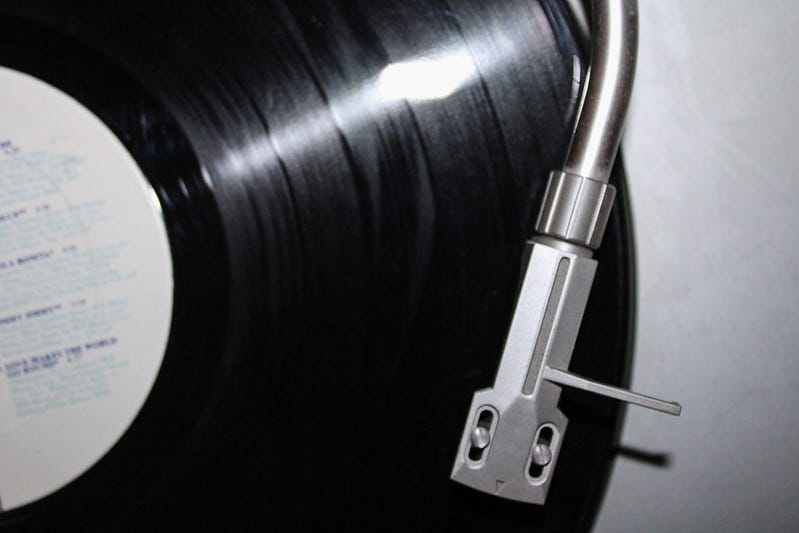
Image: Chris Hawes via Flickr.